Q1
( )에 들어갈 가장 알맞은 것을 고르십시오.
Choose the best expression to fill in the blank.
이 노래를 ( ) 10년이 넘었지만 지금도 자주 들어요.
듣고서
들은 지
듣는 대로
들으려면
'-(으)ㄴ 지 + period + 넘다/되다' means 'it has been over ~ since', so '들은 지 10년이 넘었다' is correct. '듣고서' and '들으려면' cannot connect to '10년이 넘었지만' in meaning. '듣는 대로' means 'as soon as one hears' and does not express elapsed time.
Q2
( )에 들어갈 가장 알맞은 것을 고르십시오.
Choose the best expression to fill in the blank.
서울역에 ( ) 지하철 1호선을 타야 합니다.
가는데
가려면
가니까
가도
'-(으)려면' states the intention ('if you want to go') and is followed by a necessary action: '타야 합니다'. '가니까' gives a reason, which does not fit 'must take line 1' here. '가는데' only sets a background, and '가도' means 'even if you go'.
Q3
( )에 들어갈 가장 알맞은 것을 고르십시오.
Choose the best expression to fill in the blank.
가: 내일 회의 자료는 누가 준비해요?\n나: 제가 ( ).
준비할까요
준비하거든요
준비할게요
준비하네요
'-(으)ㄹ게요' expresses the speaker's promise or offer: '제가 준비할게요' (I'll prepare it). '준비할까요' is tempting, but it is a question and the sentence ends with a period, so it does not answer the question. '-거든요' gives a reason and '-네요' expresses surprise at a new discovery.
Q4
( )에 들어갈 가장 알맞은 것을 고르십시오.
Choose the best expression to fill in the blank.
동생이 낮잠을 자는 ( ) 저는 조용히 거실 청소를 끝냈어요.
바람에
동안
탓에
대신에
'-는 동안' means 'while', so the speaker finished cleaning during the time the younger sibling slept. '-는 바람에' and '-는 탓에' give a negative cause, but finishing the cleaning quietly is not a bad result caused by the nap. '-는 대신에' means 'instead of', which does not fit.
Q5
( )에 들어갈 가장 알맞은 것을 고르십시오.
Choose the best expression to fill in the blank.
다음 주에 ( ) 프로젝트 자료를 지금 정리하고 있어요.
발표한
발표하던
발표했던
발표할
The presentation is next week, so the prospective modifier '-(으)ㄹ' is needed: '발표할 프로젝트 자료'. '발표한', '발표하던' and '발표했던' are all past modifiers and clash with '다음 주에'.
Q6
( )에 들어갈 가장 알맞은 것을 고르십시오.
Choose the best expression to fill in the blank.
면접관: 지원자께서는 이 일을 왜 ( )?
선택하셨습니까
선택하셨습니다
선택하십시오
선택하셨군요
The formal polite (합쇼체) question ending is '-(으)십니까 / -(으)셨습니까', which suits an interviewer asking '왜'. '선택하셨습니다' is the same formal level but a statement, not a question. '선택하십시오' is a command and '선택하셨군요' is an exclamation, so neither can follow '왜' as a question.
Q7
밑줄 친 부분과 의미가 가장 비슷한 것을 고르십시오.
Choose the expression closest in meaning to the underlined part.
늦잠을 자는 바람에 버스를 놓쳤어요.
자는 동안
자는 탓에
자기 위해
자더라도
'-는 바람에' gives the cause of a negative result, and '-는 탓에' has the same meaning. '자는 동안' only describes a period of time. '자기 위해' states a purpose, which does not fit missing the bus.
Q8
밑줄 친 부분과 의미가 가장 비슷한 것을 고르십시오.
Choose the expression closest in meaning to the underlined part.
그 식당은 맛이 좋은 데다가 값도 싸요.
좋은 대신
좋아도
좋더라도
좋을 뿐만 아니라
'-(으)ㄴ 데다가' adds another fact on top of the first, as does '-(으)ㄹ 뿐만 아니라'. '좋은 대신' suggests a trade-off ('good, but instead ...'), so it is the tempting wrong choice. '좋아도' and '좋더라도' mean 'even if it is good'.
Q9
밑줄 친 부분과 의미가 가장 비슷한 것을 고르십시오.
Choose the expression closest in meaning to the underlined part.
친구는 내 이야기를 듣자마자 웃음을 터뜨렸다.
듣고 나서 바로
듣는 동안에
듣기 전에
듣는 데다가
'-자마자' means 'as soon as', and '듣고 나서 바로' also means right after hearing. '듣는 동안에' would mean the friend laughed during the story, not right after it. '듣기 전에' reverses the order of events.
Q10
밑줄 친 부분과 의미가 가장 비슷한 것을 고르십시오.
Choose the expression closest in meaning to the underlined part.
이 약을 먹으면 졸릴 수도 있습니다 .
졸릴지도 모릅니다
졸릴 리가 없습니다
졸릴 수밖에 없습니다
졸리기 마련입니다
'-(으)ㄹ 수도 있다' expresses a possibility, as does '-(으)ㄹ지도 모르다'. '졸릴 수밖에 없습니다' means it is unavoidable and '졸리기 마련입니다' means it is natural and always the case, so both are too strong. '졸릴 리가 없습니다' means it is impossible.
Q11
( )에 들어갈 가장 알맞은 것을 고르십시오.
Choose the word that best fits the blank.
그 가수는 오랜 연습 끝에 드디어 무대에서 자신의 실력을 ( ).
발견했다
발달했다
발생했다
발휘했다
'실력을 발휘하다' means 'to show one's ability fully', which fits showing the results of long practice on stage. '발견하다' means to discover something new and is similar in form but does not fit. '발달하다' and '발생하다' are intransitive and cannot take '실력을'.
Q12
( )에 들어갈 가장 알맞은 것을 고르십시오.
Choose the word that best fits the blank.
퇴근 시간에는 도로가 ( ) 집에 가는 데 두 시간이 걸렸다.
막혀서
막아서
맞아서
맡아서
'도로가 막히다' (the road is congested) is the passive form, and the subject '도로가' calls for it. '막아서' is active ('blocked it') and needs an object. '맞아서' and '맡아서' only look similar in form and do not collocate with '도로가'.
Q13
( )에 들어갈 가장 알맞은 것을 고르십시오.
Choose the word that best fits the blank.
친구에게 돈을 빌려 달라고 부탁했다가 ( ) 기분이 나빴다.
거절해서
거절당해서
거절하게 해서
거절하려고
The speaker was the one refused, so the passive '거절당하다' is required: '거절당해서 기분이 나빴다'. '거절해서' would mean the speaker refused, which reverses the roles. '거절하려고' states a purpose and does not fit the feeling.
Q14
( )에 들어갈 가장 알맞은 것을 고르십시오.
Choose the word that best fits the blank.
실수로 사진 파일이 ( ) 다시 찾을 수가 없어요.
저장돼서
복사돼서
삭제돼서
전송돼서
'삭제되다' (to be deleted) explains why the file cannot be found again. '저장돼서', '복사돼서' and '전송돼서' all collocate with a file, but they mean the file was saved, copied or sent, so the file would still exist.
Q15
무엇에 대한 글입니까?
What is this text about?
이렇게 내놓아 주세요
분리배출 전 준비 방법
재활용품 수거 요일
재활용 가능한 물건의 종류
일반 쓰레기 봉투 사용법
Each line explains what to do with an item before putting it out for recycling, so the topic is how to prepare items for sorted disposal. '재활용 가능한 물건의 종류' is tempting because plastic, paper and glass are listed, but the text gives handling steps, not a list of what is recyclable. No collection days are given, and the trash-bag use is never explained.
Q16
무엇에 대한 글입니까?
What is this text about?
책 나눔 행사
읽은 책을 팔고 사는 장터
도서관 회원 가입 안내
읽은 책을 서로 바꾸는 행사
책을 무료로 빌려주는 서비스
People bring books they have read and swap them for others, up to three each, so it is an event for exchanging books. '책을 무료로 빌려주는 서비스' is tempting because it is held at a library and is free, but the books are taken home in exchange, not borrowed. Buying and selling and membership are never mentioned.
Q17
다음을 읽고 내용이 같은 것을 고르십시오.
Read the passage and choose the statement that matches.
저는 지난달부터 퇴근 후에 동네 수영장에 다니고 있습니다. 처음에는 물이 무서워서 일주일에 한 번밖에 가지 못했는데, 요즘은 일주일에 세 번 갑니다. 수영을 시작한 뒤 어깨 통증이 줄었지만 식욕이 늘어서 오히려 체중이 조금 늘었습니다. 그래서 저녁 식사는 가볍게 먹으려고 합니다.
수영을 시작하고 나서 어깨가 덜 아프게 되었다.
처음부터 일주일에 세 번씩 수영장에 갔다.
수영을 해서 체중이 눈에 띄게 줄었다.
저녁 식사량을 이미 줄여서 효과를 보았다.
'어깨 통증이 줄었지만' is paraphrased as 'the shoulder hurts less'. '처음부터 세 번' changes the detail, since at first the writer went only once a week. '체중이 줄었다' contradicts '체중이 조금 늘었습니다', and the dinner reduction is only a plan ('먹으려고 합니다').
Q18
다음을 읽고 내용이 같은 것을 고르십시오.
Read the passage and choose the statement that matches.
우리 아파트는 다음 달 1일부터 방문 차량 주차 방법이 바뀝니다. 앞으로 방문 차량은 관리사무소에서 등록해야 주차할 수 있습니다. 등록은 방문하는 날 당일에 할 수 있으며, 두 시간까지는 무료입니다. 두 시간이 지나면 30분마다 500원이 부과됩니다. 입주민 차량은 지금처럼 따로 등록하지 않아도 됩니다.
방문 차량은 하루 전에 등록해야 한다.
입주민은 방문객과 달리 따로 등록하지 않고 주차할 수 있다.
방문 차량은 세 시간까지 무료로 주차할 수 있다.
입주민 차량도 다음 달부터 등록해야 한다.
'입주민 차량은 지금처럼 따로 등록하지 않아도 됩니다' is paraphrased as residents can park without separate registration. '하루 전에' changes the detail, since registration is possible on the day of the visit. Free parking lasts two hours, not three, and the rule change applies only to visitors, not residents.
Q19
다음을 순서대로 맞게 배열한 것을 고르십시오.
Choose the correct order of the sentences.
(가) 하지만 요즘은 앱으로 미리 주문하고 가게에서 받아 가는 사람이 늘고 있다.\n(나) 예전에는 커피를 마시려면 가게에서 줄을 서서 기다려야 했다.\n(다) 이렇게 하면 기다리는 시간이 줄어서 바쁜 직장인들에게 인기가 많다.\n(라) 그래서 가게들도 전용 픽업 자리를 따로 만들고 있다.
(가)-(나)-(다)-(라)
(나)-(가)-(다)-(라)
(나)-(가)-(라)-(다)
(다)-(나)-(가)-(라)
The flow is: past situation (나), contrast '하지만' with the new way (가), '이렇게 하면' describing its benefit (다), and '그래서' stores' response (라). '(나)-(가)-(라)-(다)' is tempting, but '이렇게 하면' in (다) needs to follow the description in (가), and '그래서' in (라) follows the popularity in (다).
Q20
( )에 들어갈 말로 가장 알맞은 것을 고르십시오.
Choose the best phrase to fill in the blank.
요즘 재택근무를 도입하는 회사가 늘고 있다. 출퇴근에 걸리는 시간이 줄어서 개인 시간이 늘어난다는 점은 분명한 장점이다. 또 사무실보다 조용한 환경에서 일에 집중할 수 있다고 말하는 사람도 많다. 그러나 집에서 일하다 보면 일과 휴식의 경계가 흐려지기 쉽다. 퇴근 시간이 되어도 컴퓨터 앞을 떠나지 못하고 ( ). 그래서 전문가들은 일하는 시간을 미리 정하고, 일이 끝나면 업무용 컴퓨터를 꺼 두라고 조언한다.
동료와 이야기할 기회가 많아져 오히려 일이 늦어지는 경우가 적지 않다
집중이 잘 되어 일을 일찍 끝내고 쉬는 경우가 적지 않다
출퇴근 시간이 길어져 개인 시간이 줄어드는 경우가 적지 않다
남은 일을 처리하느라 저녁 늦게까지 일하는 경우가 적지 않다
'그러나' introduces a disadvantage, and the advice to set work hours and turn off the computer shows the problem is working past quitting time, so '저녁 늦게까지 일하는 경우' fits. '집중이 잘 되어 일을 일찍 끝내고' is a benefit and contradicts '그러나' and the advice. '출퇴근 시간이 길어져' contradicts the earlier statement that commuting time is reduced.
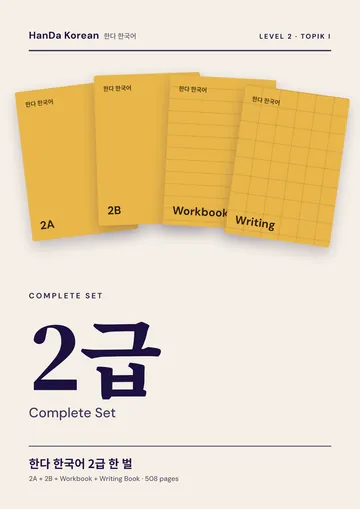 HanDa Korean Level 2 — Complete Set
Complete level 2 — student books, workbook and writing book · 508 pages
$10
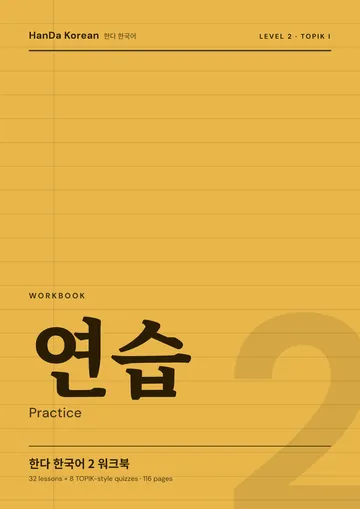 HanDa Korean 2 Workbook
Extra drilling on the same lessons · 116 pages
$6
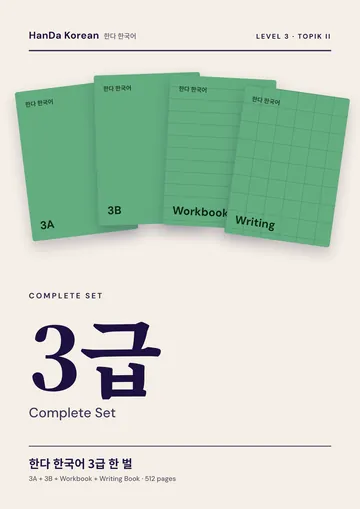 HanDa Korean Level 3 — Complete Set
Complete level 3 — student books, workbook and writing book · 512 pages
$10
 Korean Grammar & Vocabulary Reference
Every pattern from level 1 to 6 in one book · 216 pages
$8
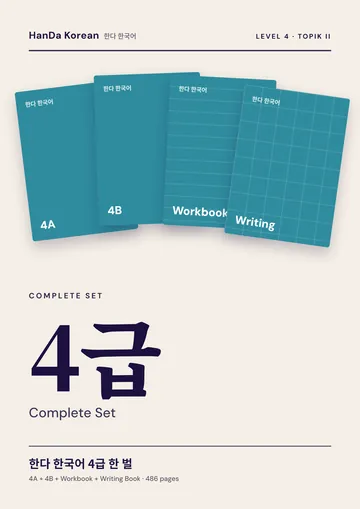 HanDa Korean Level 4 — Complete Set
Complete level 4 — student books, workbook and writing book · 486 pages
$10