Korean Weekly — Sep 28 – Oct 4
This week you learned 35 new words and studied 7 important grammar patterns including -고, -(으)려고, -는 것/게/거, -(으)ㄹ, -(아/어)서, 에, and 어떤 + 명사. You also completed 7 fill-in-the-blank drills to practice these patterns in context. To review effectively this week, go back through those 7 drills and try them again without looking at your answers, focusing on why each grammar pattern fits the sentence.
Sep 28 (Mon)
Words
| Korean | Meaning | Part of speech | Common forms |
|---|---|---|---|
| 가다 | To go | verb | 가요 · 갔어요 · 안 가요 |
| 이사 | Moving (house) | noun | — |
| 약속하다 | To promise / make plans | verb | 약속해요 · 약속했어요 · 약속 안 해요 |
| 수리하다 | To repair | verb | 수리해요 · 수리했어요 · 수리 안 해요 |
| 나누다 | To divide / share | verb | 나눠요 · 나눴어요 · 안 나눠요 |
Grammar
-고 — and (then)
How to build it: verb/adjective stem + 고
Example: 밥을 먹고 커피를 마셨어요.
Sentence drill
-는 것/게/거 — the thing that / the fact of
How to build it: verb stem + 는 것/게/거
Fill in the blank: 혼자 있는 ___ 이 좋아요.
Show the answer
게
Sep 29 (Tue)
Words
| Korean | Meaning | Part of speech | Common forms |
|---|---|---|---|
| 웃다 | To laugh / smile | verb | 웃어요 · 웃었어요 · 안 웃어요 |
| 프린터 | Printer | noun | — |
| 강 | River | noun | — |
| 혼자 | Alone | adverb | — |
| 우유 | Milk | noun | — |
Grammar
-(으)려고 — intending to
How to build it: verb stem + (으)려고
Example: 한국어를 배우려고 학원에 다녀요.
Sentence drill
-(으)ㄹ 것 같다 — seems like, I think
How to build it: verb/adjective stem + (으)ㄹ 것 같다
Fill in the blank: 비가 올 ___ 같아요.
Show the answer
것
Sep 30 (Wed)
Words
| Korean | Meaning | Part of speech | Common forms |
|---|---|---|---|
| 먼저 | First | adverb | — |
| 함께 | Together | adverb | — |
| 당근 | Carrot | noun | — |
| 지하철 | Subway | noun | — |
| 마시다 | To drink | verb | 마셔요 · 마셨어요 · 안 마셔요 |
Grammar
-는 것/게/거 — the thing that / the fact of
How to build it: verb stem + 는 것/게/거
Example: 혼자 있는 ___ 이 좋아요. → 게
Sentence drill
의 — 's (possessive)
How to build it: noun + 의
Fill in the blank: 친구___ 책이에요.
Show the answer
의
Oct 1 (Thu)
Words
| Korean | Meaning | Part of speech | Common forms |
|---|---|---|---|
| 포도 | Grape | noun | — |
| 일곱 | Seven | number | — |
| 카드 | Card | noun | — |
| 현금 | Cash | noun | — |
| 불고기 | Bulgogi | noun | — |
Grammar
-(으)ㄹ — (verb) that will be done
How to build it: verb stem + (으)ㄹ + noun
Example: 내일 읽을 ___ 이 있어요. → 책
Sentence drill
연세 — age (honorific)
How to build it: 나이 → 연세
Fill in the blank: ___ 가 어떻게 되세요?
Show the answer
연세
Oct 2 (Fri)
Words
| Korean | Meaning | Part of speech | Common forms |
|---|---|---|---|
| 걱정되다 | Worried | verb | 걱정되어요 · 걱정되었어요 · 안 걱정되어요 |
| 휴일 | Holiday | noun | — |
| 김치 | Kimchi | noun | — |
| 정확하다 | Accurate / precise | adjective | 정확해요 · 정확했어요 · 안 정확해요 |
| 비슷하다 | Similar | adjective | 비슷해요 · 비슷했어요 · 안 비슷해요 |
Grammar
-(아/어)서 — because, and then
How to build it: verb/adjective stem + 아서/어서
Example: 배가 불러서 못 먹겠어요.
Sentence drill
-아/어 주다 — do for someone
How to build it: verb stem + 아/어 주다
Fill in the blank: 친구를 도와___ .
Show the answer
줬어요
Oct 3 (Sat)
Words
| Korean | Meaning | Part of speech | Common forms |
|---|---|---|---|
| 넷 | Four | number | — |
| 덥다 | Hot | adjective | 더워요 · 더웠어요 · 안 더워요 |
| 어렵다 | Difficult | adjective | 어려워요 · 어려웠어요 · 안 어려워요 |
| 일 | One (sino) | number | — |
| 옆 | Beside / next to | noun | — |
Grammar
에 — at, to, in (static)
How to build it: place/time noun + 에
Example: 학교에 가요.
Sentence drill
있다/없다 관형형 — that has/doesn't have
How to build it: verb stem + 는 + noun (있다/없다)
Fill in the blank: 자신이 있는 ___ 을 골라요.
Show the answer
것
Oct 4 (Sun)
Words
| Korean | Meaning | Part of speech | Common forms |
|---|---|---|---|
| 친구 | Friend | noun | — |
| 적다 | Few / little | adjective | 적어요 · 적었어요 · 안 적어요 |
| 바쁘다 | Busy | adjective | 바빠요 · 바빴어요 · 안 바빠요 |
| 간 | Saltiness / seasoning level | noun | — |
| 좁다 | Narrow | adjective | 좁아요 · 좁았어요 · 안 좁아요 |
Grammar
어떤 + 명사 — what kind of, some
How to build it: 어떤 + noun + 이다/하다
Example: 어떤 ___ 을 좋아해요? → 음악
Sentence drill
중요한 + 명사 — important
How to build it: 중요한 + noun + 이다
Fill in the blank: 중요한 ___ 을 잊었어요.
Show the answer
것
Learn this properly, not just once
Blog posts teach one thing at a time. The HanDa books teach level 1 in order — every lesson built to be spoken, with a workbook and writing book beside it.
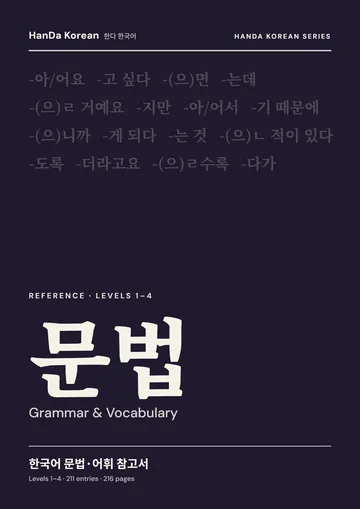 Korean Grammar & Vocabulary Reference
Goes with this post · 216 pages
$8
Korean Grammar & Vocabulary Reference
Goes with this post · 216 pages
$8
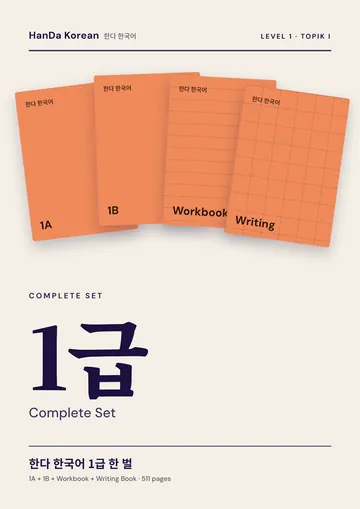 HanDa Korean Level 1 — Complete Set
Everything for level 1 — books, workbook and writing book · 511 pages
$10
HanDa Korean Level 1 — Complete Set
Everything for level 1 — books, workbook and writing book · 511 pages
$10
Practice this with an AI tutor
HanDa corrects every sentence you write or say — in real conversation, not flashcards.