Korean Weekly — Sep 21 – Sep 27
This week you covered 35 vocabulary words alongside 7 grammar patterns including -는 + 명사, 보다, 특별한 + 명사, 드시다, 성함, 형용사 + -(으)ㄴ + 명사, and 어서 오세요. You completed 7 fill-in-the-blank drills to practice these patterns in context. To solidify this week's material, spend a few minutes each day reviewing the drills you found most challenging, as repetition will help these patterns become automatic when you encounter them in real situations.
Sep 21 (Mon)
Words
| Korean | Meaning | Part of speech | Common forms |
|---|---|---|---|
| 치마 | Skirt | noun | — |
| 가방 | Bag | noun | — |
| 굽다 | To grill / bake | verb | 구워요 · 구웠어요 · 안 구워요 |
| 양파 | Onion | noun | — |
| 역 | Station | noun | — |
Grammar
-는 + 명사 — noun that is (doing)
How to build it: verb stem + 는 + noun
Example: 지금 읽는 책이 재미있어요.
Sentence drill
-(으)ㄹ 수 있다 — can, be able to
How to build it: verb stem + (으)ㄹ 수 있다
Fill in the blank: 한국어로 말할 ___ 있어요.
Show the answer
수
Sep 22 (Tue)
Words
| Korean | Meaning | Part of speech | Common forms |
|---|---|---|---|
| 충전기 | Charger | noun | — |
| 예능 | Variety show | noun | — |
| 덥다 | Hot (weather) | adjective | 더워요 · 더웠어요 · 안 더워요 |
| 모자 | Hat | noun | — |
| 매일 | Every day | adverb | — |
Grammar
보다 — than
How to build it: noun + 보다
Example: 나보다 키가 커요.
Sentence drill
요새/요즘 — these days, lately
How to build it: 요즘/요새 + present form
Fill in the blank: 요즘 ___?
Show the answer
어떻게 지내요
Sep 23 (Wed)
Words
| Korean | Meaning | Part of speech | Common forms |
|---|---|---|---|
| 의자 | Chair | noun | — |
| 운동하다 | To exercise | verb | 운동해요 · 운동했어요 · 운동 안 해요 |
| 검은색 | Black | noun | — |
| 입다 | To wear | verb | 입어요 · 입었어요 · 안 입어요 |
| 거절하다 | To refuse | verb | 거절해요 · 거절했어요 · 거절 안 해요 |
Grammar
특별한 + 명사 — special
How to build it: 특별한 + noun + 이다
Example: 특별한 ___ 이 있어요? → 이유
Sentence drill
-(아/어)야 하다 — have to, must
How to build it: verb stem + 아야/어야 하다
Fill in the blank: 지금 가___ 해요.
Show the answer
야
Sep 24 (Thu)
Words
| Korean | Meaning | Part of speech | Common forms |
|---|---|---|---|
| 칫솔 | Toothbrush | noun | — |
| 수건 | Towel | noun | — |
| 공원 | Park | noun | — |
| 계란 | Egg | noun | — |
| 그림 | Picture / painting | noun | — |
Grammar
드시다 — eat/drink (honorific)
How to build it: 먹다/마시다 → 드시다
Example: 커피 ___ 겠어요? → 드시
Sentence drill
-(으)ㄴ 다음에 — after doing (then next)
How to build it: verb stem + (으)ㄴ 다음에
Fill in the blank: 생각한 다음에 ___ .
Show the answer
결정할게요
Sep 25 (Fri)
Words
| Korean | Meaning | Part of speech | Common forms |
|---|---|---|---|
| 문제 | Problem / question | noun | — |
| 같이 | Together | adverb | — |
| 예매하다 | To book (tickets) | verb | 예매해요 · 예매했어요 · 예매 안 해요 |
| 놀다 | To play / hang out | verb | 놀아요 · 놀았어요 · 안 놀아요 |
| 그것 | That | pronoun | — |
Grammar
성함 — name (honorific)
How to build it: 이름 → 성함
Example: ___ 이 어떻게 되세요? → 성함
Sentence drill
열리다 — be opened
How to build it: 열다 → 열리다
Fill in the blank: 문이 저절로 ___ .
Show the answer
열렸어요
Sep 26 (Sat)
Words
| Korean | Meaning | Part of speech | Common forms |
|---|---|---|---|
| 대략 | Approximately | adverb | — |
| 발 | Foot | noun | — |
| 후배 | Junior (at work/school) | noun | — |
| 아무리 | No matter how | adverb | — |
| 준비하다 | To prepare | verb | 준비해요 · 준비했어요 · 준비 안 해요 |
Grammar
형용사 + -(으)ㄴ + 명사 — adjective modifying noun
How to build it: adjective stem + (으)ㄴ + noun
Example: 예쁜 ___ 이 있어요. → 꽃
Sentence drill
(이)랑/하고 — and, with
How to build it: noun + 이랑(with final consonant)/랑(no final consonant) / 하고
Fill in the blank: 친구___ 같이 갔어요.
Show the answer
랑
Sep 27 (Sun)
Words
| Korean | Meaning | Part of speech | Common forms |
|---|---|---|---|
| 약국 | Pharmacy | noun | — |
| 목마르다 | Thirsty | adjective | 목말라요 · 목말랐어요 · 안 목말라요 |
| 저것 | That (over there) | pronoun | — |
| 역시 | As expected / indeed | adverb | — |
| 만두 | Dumplings | noun | — |
Grammar
어서 오세요 — welcome
How to build it: set phrase
Example: 어서 오세요!
Sentence drill
-(으)ㄹ 수 없다 — cannot
How to build it: verb stem + (으)ㄹ 수 없다
Fill in the blank: 지금은 도와줄 ___ 없어요.
Show the answer
수
Learn this properly, not just once
Blog posts teach one thing at a time. The HanDa books teach level 1 in order — every lesson built to be spoken, with a workbook and writing book beside it.
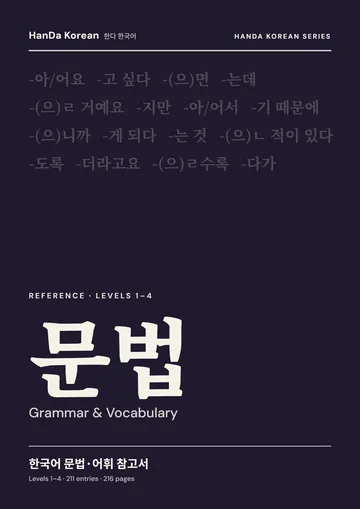 Korean Grammar & Vocabulary Reference
Goes with this post · 216 pages
$8
Korean Grammar & Vocabulary Reference
Goes with this post · 216 pages
$8
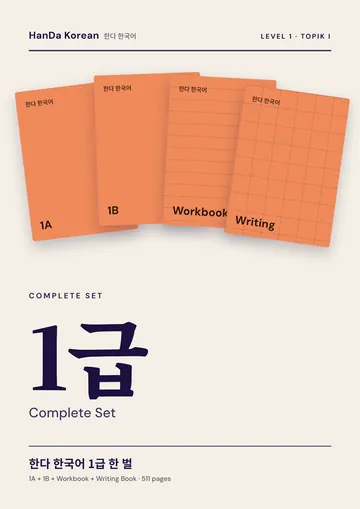 HanDa Korean Level 1 — Complete Set
Everything for level 1 — books, workbook and writing book · 511 pages
$10
HanDa Korean Level 1 — Complete Set
Everything for level 1 — books, workbook and writing book · 511 pages
$10
Practice this with an AI tutor
HanDa corrects every sentence you write or say — in real conversation, not flashcards.