Korean Weekly — Sep 14 – Sep 20
This week you learned 35 new words and studied 7 grammar patterns including (이)랑/하고, -(으)시-, 감사합니다, -(으)러, 부터, -(으)ㄴ 적이 있다, and 에서. You also completed 7 fill-in-the-blank drills to practice applying these patterns. A helpful way to review this material is to go back through the drills and try them again without looking at your previous answers, focusing especially on the patterns that felt less familiar the first time through.
Sep 14 (Mon)
Words
| Korean | Meaning | Part of speech | Common forms |
|---|---|---|---|
| 시험 | Test | noun | — |
| 깨끗하다 | Clean | adjective | 깨끗해요 · 깨끗했어요 · 안 깨끗해요 |
| 약속 | Promise / appointment | noun | — |
| 진료 | Medical examination | noun | — |
| 연봉 | Annual salary | noun | — |
Grammar
(이)랑/하고 — and, with
How to build it: noun + 이랑(with final consonant)/랑(no final consonant) / 하고
Example: 친구랑 같이 갔어요.
Sentence drill
-(아/어)서 — because, and then
How to build it: verb/adjective stem + 아서/어서
Fill in the blank: 배가 ___ 못 먹겠어요.
Show the answer
불러서
Sep 15 (Tue)
Words
| Korean | Meaning | Part of speech | Common forms |
|---|---|---|---|
| 문제 | Problem | noun | — |
| 관광 | Sightseeing / tourism | noun | — |
| 아빠 | Dad | noun | — |
| 과일 | Fruit | noun | — |
| 더럽다 | Dirty | adjective | 더러워요 · 더러웠어요 · 안 더러워요 |
Grammar
-(으)시- — subject honorific infix
How to build it: verb stem + (으)시 + ending
Example: 선생님이 오___ 었어요. → 셨
Sentence drill
성함 — name (honorific)
How to build it: 이름 → 성함
Fill in the blank: ___ 이 어떻게 되세요?
Show the answer
성함
Sep 16 (Wed)
Words
| Korean | Meaning | Part of speech | Common forms |
|---|---|---|---|
| 선택하다 | To choose / select | verb | 선택해요 · 선택했어요 · 선택 안 해요 |
| 재미있다 | Fun / interesting | adjective | 재미있어요 · 재미있었어요 · 안 재미있어요 |
| 있다 | To exist / have | verb | 있어요 · 있었어요 · 안 있어요 |
| 내리다 | To get off / come down | verb | 내려요 · 내렸어요 · 안 내려요 |
| 소방관 | Firefighter | noun | — |
Grammar
감사합니다 — thank you (formal)
How to build it: 감사하다 + ㅂ니다
Example: 도와주셔서 감사합니다.
Sentence drill
-(으)ㄹ 때 — when, at the time of
How to build it: verb/adjective stem + (으)ㄹ 때
Fill in the blank: 심심할 ___ 드라마 봐요.
Show the answer
때
Sep 17 (Thu)
Words
| Korean | Meaning | Part of speech | Common forms |
|---|---|---|---|
| 삼겹살 | Pork belly | noun | — |
| 신선하다 | Fresh | adjective | 신선해요 · 신선했어요 · 안 신선해요 |
| 교회 | Church | noun | — |
| 늘리다 | To extend / increase | verb | 늘려요 · 늘렸어요 · 안 늘려요 |
| 치과 | Dentist | noun | — |
Grammar
-(으)러 — in order to go
How to build it: verb stem + (으)러 + motion verb
Example: 밥 먹으러 식당에 가요.
Sentence drill
-(으)ㄴ 후에 — after doing
How to build it: verb stem + (으)ㄴ 후에
Fill in the blank: 밥을 먹은 ___ 산책해요.
Show the answer
후에
Sep 18 (Fri)
Words
| Korean | Meaning | Part of speech | Common forms |
|---|---|---|---|
| 말 | Horse | noun | — |
| 전공 | Major (academic) | noun | — |
| 이름 | Name | noun | — |
| 주다 | To give | verb | 줘요 · 줬어요 · 안 줘요 |
| 예약하다 | To reserve | verb | 예약해요 · 예약했어요 · 예약 안 해요 |
Grammar
부터 — from (time/order)
How to build it: noun + 부터
Example: 9시부터 시작해요.
Sentence drill
보이다 — be seen, be visible
How to build it: 보다 → 보이다
Fill in the blank: 저기 산이 잘 ___ .
Show the answer
보여요
Sep 19 (Sat)
Words
| Korean | Meaning | Part of speech | Common forms |
|---|---|---|---|
| 진짜 | Really (casual) | adverb | — |
| 화장실 | Bathroom | noun | — |
| 졸업 | Graduation | noun | — |
| 할인 | Discount | noun | — |
| 누구 | Who | pronoun | — |
Grammar
-(으)ㄴ 적이 있다 — have done before
How to build it: verb stem + (으)ㄴ 적이 있다
Example: 한국 가본 적이 있어요?
Sentence drill
특별한 + 명사 — special
How to build it: 특별한 + noun + 이다
Fill in the blank: 특별한 ___ 이 있어요?
Show the answer
이유
Sep 20 (Sun)
Words
| Korean | Meaning | Part of speech | Common forms |
|---|---|---|---|
| 삼 | Three (sino) | number | — |
| 손 | Hand | noun | — |
| 수업 | Class / lesson | noun | — |
| 기대하다 | To look forward to | verb | 기대해요 · 기대했어요 · 기대 안 해요 |
| 벌써 | Already | adverb | — |
Grammar
에서 — at, from (action)
How to build it: place noun + 에서
Example: 카페에서 공부해요.
Sentence drill
새로운 + 명사 — new
How to build it: 새로운 + noun
Fill in the blank: 새로운 ___ 을 시작했어요.
Show the answer
일
Learn this properly, not just once
Blog posts teach one thing at a time. The HanDa books teach level 1 in order — every lesson built to be spoken, with a workbook and writing book beside it.
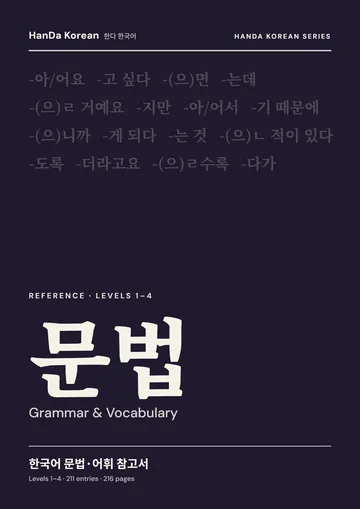 Korean Grammar & Vocabulary Reference
Goes with this post · 216 pages
$8
Korean Grammar & Vocabulary Reference
Goes with this post · 216 pages
$8
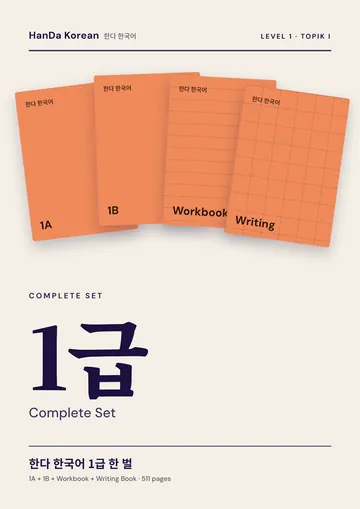 HanDa Korean Level 1 — Complete Set
Everything for level 1 — books, workbook and writing book · 511 pages
$10
HanDa Korean Level 1 — Complete Set
Everything for level 1 — books, workbook and writing book · 511 pages
$10
Practice this with an AI tutor
HanDa corrects every sentence you write or say — in real conversation, not flashcards.